header main logo header main logo

Major focus areas

Creating Water harvesting potential

Afforestation

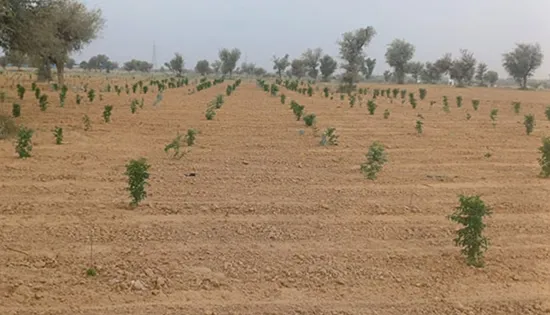
ICICI Bank is committed to environmental restoration and safeguarding ecology and has been actively engaging with local communities and institutions to foster green growth across diverse regions. Some of the initiatives encompass tree plantation, rejuvenation of degraded grasslands and pasturelands, avenue plantation and agroforestry. The Bank has also supported the construction of various water conservation structures to enhance water availability for greening arid areas. Across the country, 4.9 million trees have been planted till Mar 31, 2025. In fiscal 2024, ICICI Foundation initiated a tree plantation drive in collaboration with Tata Power, a project aimed at planting native trees compatible with local soil and biodiversity rejuvenations, over a five-year period.
Creating Water harvesting potential

Water conservation efforts

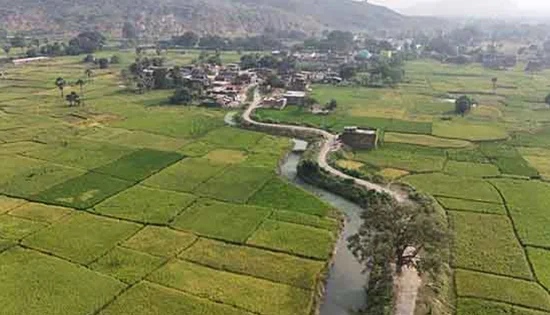
Water conservation is one of the key initiatives undertaken by the Bank, recognising the urgent need for access to clean water sources, especially in arid regions. The Bank engages with local authorities and administration in the water-stressed areas of the country to promote water conservation and the revival of depleting water sources. The water conservation initiatives have led to a total water conservation potential of 33.87 billion litres through capacity creation at 9,690 schools and creation of 17,453 water bodies.
Supporting Ecological and Wildlife Conservation in Forests

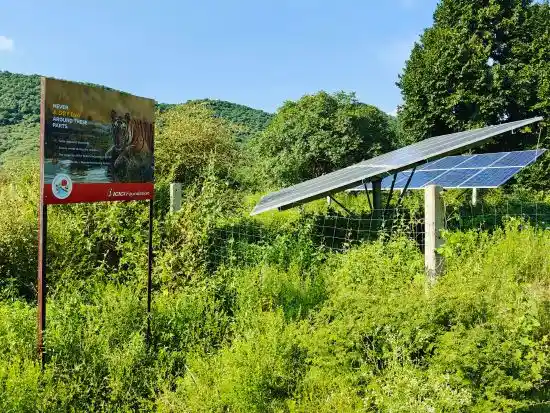
Ecological and wildlife conservation in forests

Protecting India’s forests, designated reserves, diverse national parks and wildlife sanctuaries has been one of the key initiatives undertaken by the Bank for biodiversity conservation. These interventions employ an integrated approach that harmonises biodiversity conservation with sustainable development in peripheral villages. This multi-faceted strategy has yielded tangible, on-ground outcomes, both within and beyond designated forest areas. Collaborating with the State Forest Departments is central to conservation initiatives. Till , this environmental initiative has covered 56 forests and tiger reserves across 19 States.

A key initiative in fiscal 2025, along with the Bombay Natural History Society was the effort towards safeguarding The Great Indian Bustard in the state of Rajasthan, whose population has dwindled over the years. This included focusing on habitat restoration in villages surrounding Pokaran town in Jaisalmer district, desiltation and rejuvenation of the water bodies across the region to revitalise the ecosystem and the introduction of systematic monitoring processes to evaluate the impact of the interventions.

Installation of Solar Power in Rural School

Solar power in rural schools

The Bank has been encouraging the use of clean energy and various projects have been initiated to drive the transition to renewable energy usage in India’s urban and rural areas and strengthen the Bank’s environmental protection efforts. In fiscal 2025, the Bank initiated a biogas project in a village in Maharashtra, to provide access to clean energy. 3,006.5 KWp (Kilowatt-peak) of solar power capacity has been provided to 770 schools in fiscal 2025. Cumulatively, 9,970 KWp of solar power capacity has been installed across 3,180 schools since fiscal 2022, as part of the clean energy initiative.

Supporting Waste Management

Waste Management

Effective waste management solutions are critical to safeguard public health and the environment and form a critical part of the Bank’s environmental initiatives. In fiscal 2025, multiple projects were initiated under the waste management intervention, providing essential equipment to municipal bodies and supporting communities in and around Defense Cantonment Boards with waste treatment plants. These efforts have led to the adoption of more efficient waste management practices.
TMC

Supporting cancer care, eye care and cardiac care

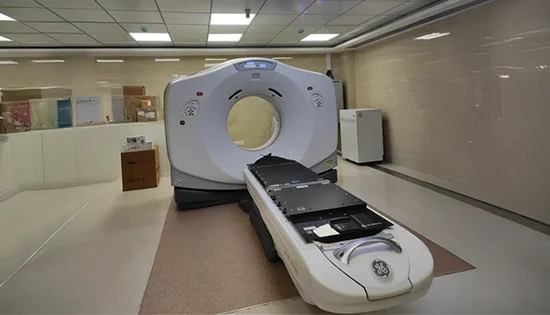
The Bank’s healthcare initiatives continue to focus on promoting affordable and accessible healthcare across the underdeveloped and remote regions of India. In fiscal 2025, support was extended for capacity building in reputed hospitals and healthcare institutions by providing equipment and creation of infrastructure in the areas of cancer care, cardiac care and eye care. Healthcare interventions enabled 2.5 million individuals to access quality treatment in 550 hospitals across India since 2020 and benefitted 400,000 people in fiscal 2025.

TMC

Supporting individuals with physical challenges

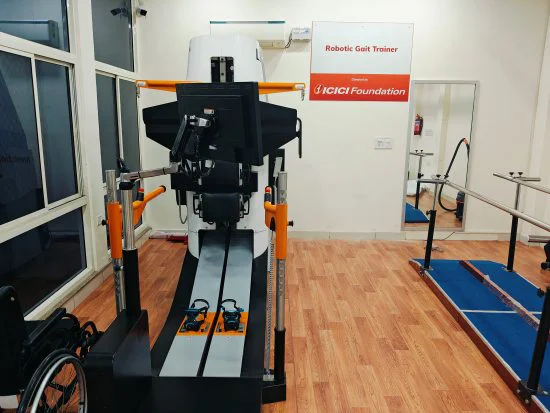
In fiscal 2025, the Bank donated a gait training machine to Bhagwan Mahaveer Viklang Sahayata Samiti (BMVSS) in Jaipur, Rajasthan, for enhancing mobility, strengthening muscles and accelerating recovery of individuals with mobility impairments. In another initiative, a Hydrotherapy Treadmill was donated to Asha Rehabilitation Centre (ARC) at Narangi Cantonment in Guwahati, Assam. The centre offers education, sports infrastructure, medical therapies and rehabilitation training for differently abled children.

TMC

Tata Memorial Centre (TMC) Project for Cancer Treatment

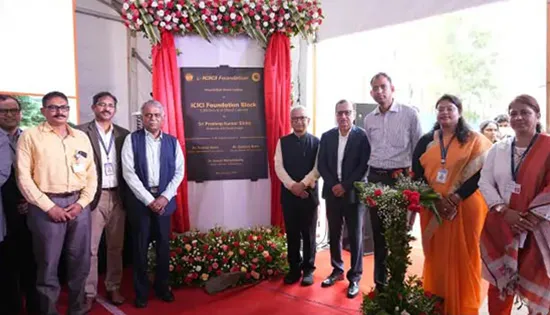
ICICI Bank has committed more than ₹18 billion to TMC for setting up three new cancer care facilities with state-of-the-art infrastructure and equipment— one each in Maharashtra, Punjab and Andhra Pradesh. In June 2025, the construction of the ICICI Foundation Block for Child and Blood Cancer Care commenced in Visakhapatnam, Andhra Pradesh.

TMC

Partnering with IITs for Healthcare Technology Innovations

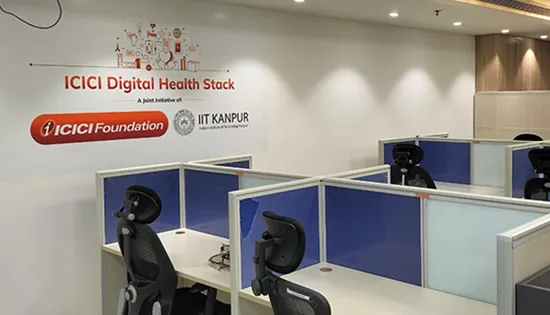
The Bank has collaborated with the Indian Institute of Technology (IIT) at Mumbai in Maharashtra and Kanpur in Uttar Pradesh, to drive healthcare technology advancements. The Bank has committed over ₹700 million to expand the Biomedical Engineering and Technology Innovation Centre (BETIC) facility at IIT Bombay and establish the ‘IIT-ICICI BETIC Hub’. The hub will support med-tech startups and train professionals to build and operate state-of-the-art medical equipment and fixtures that will eventually be scaled up to benefit millions of patients. ICICI Bank also partnered with the Indian Institute of Technology (IIT) Kanpur to develop a state-of-the-art ICICI Digital Health Stack (ICICI-DHS). The partnership helps to develop a Real-Time Availability and Referral Portal (RT-BARP) for the Department of Medical Health & Family Welfare, Government of Uttar Pradesh. It is an inter-hospital referral and monitoring system created to enable faster medical care.

Boosting income of LAC farmers

Boosting Farmers’ Income in Meghalaya

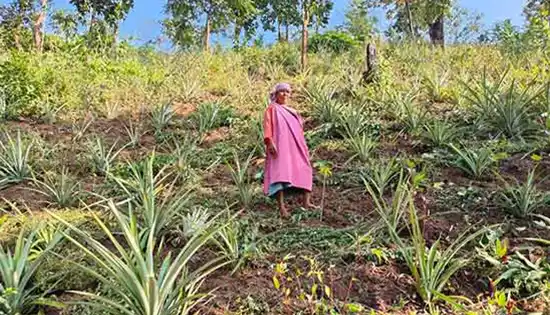
The Bank initiated projects in the region for strengthening the agricultural value chain and addressing issues related to low crop productivity on account of multiple unfavourable factors like soil erosion, crop diseases, outdated cultivation practices and limited access to quality planting material which adversely affected the farmer’s agricultural income. The intervention in the Umling block in the district included providing 310 farmers with 1.26 million healthy pineapple saplings and high-quality seeds (ginger and turmeric), along with training in modern cultivation techniques to improve productivity and adopt sustainable farming practices. The intervention benefitted 310 small and marginal farmers, expanded farmland by 10% (300 acres) in 35 villages in the region’s pineapple belt and enabled farmers to earn an additional income of ₹120,000 per acre a year from pineapple cultivation.

Boosting income of LAC farmers

Reviving Millet Cultivation in Tribal Communities

A holistic programme to revive millet farming was undertaken in 118 villages in Madhya Pradesh, addressing issues related to declining productivity, soil degradation and limited market access. The programme integrated traditional knowledge of farming with modern innovations, encouraging self-sustaining agricultural practices among tribal communities. The initiative included distribution of certified millet seeds for better productivity, supply of one litre of bio-fertilisers for seed treatment, introduction of 6 kgs of certified seeds per acre and establishments of 450 village-level bio-input centres locally known as 'Jaivik ghars', for organic fertilisers and bio-pesticides, utilising local materials such as cow dung, neem and plant waste. The intervention benefited about 2,180 farmers, covered 1,090 acres under millet cultivation and increased household income in participating villages by 20%.

Boosting income of LAC farmers

Creating Mustard value chain in Haryana

In fiscal 2024, seven Self-Help Groups (SHGs) were supported in several districts of Haryana — four in Hissar and three in Sirsa — to establish mustard oil processing units as part of a sustainable livelihood initiative. The project provided SHGs with cold press oil extraction machines and solar units, encouraged them to adopt climate-resilient agriculture, supported with quality seeds, organic composts and market linkages, among others. The initiative benefitted 1,000 households since 2022 and increased household income, improved access to financial services and promoted mustard cultivation.

Boosting income of LAC farmers

Boosting income of LAC farmers

Our commitment is to strengthen local ecosystems through its value chain-based projects and provide sustainable livelihoods to make villages self-sustaining. ICICI Foundation has been supporting the lac farmers of Jharkhand since 2020. The project provides the farmers with infrastructure and support for lac cultivation.

Positively impacted 4,430 beneficiaries and witnessed 60% increase in the average income of 2,200 tribals and forest dwellers where the intervention has been carried out for over a year.

Promoting Rural Infrastructure Development

Skilling initiatives

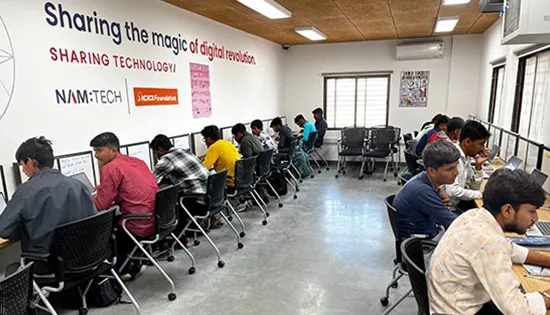
In collaboration with leading academic and research institutions, specialised skill training is leveraged through scalable, technology-driven courses. In fiscal 2025, support was extended for the International Professional Technician Certificate Programme at the NAMTECH School of Social Impact to equip students with future-ready skills. Five Industrial Training Institutes (ITIs) designated as ‘hubs’ were equipped with smart manufacturing and digital-edge labs under this initiative. Training was undertaken across five high-demand trades namely precision engineering, energy automation, industrial automation, automotive technology and advanced welding which will benefit over 2,000 ITI students annually.

Promoting Financial literacy

Promoting financial literacy

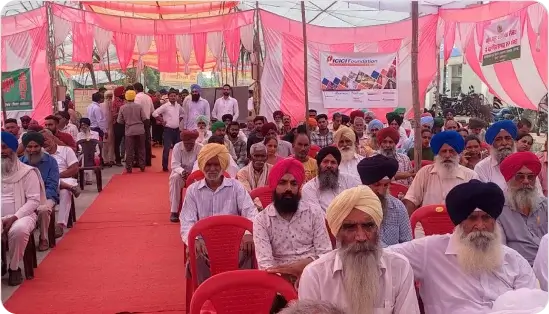
Financial literacy programmes have been regularly organised to empower individuals with essential knowledge and skills required for personal financial planning and risk management. The programme covers topics like financial budgeting, insurance, investments and cyber-security, among others. In partnership with government departments, corporate entities and other institutions across the country to conduct financial literacy sessions, the sessions were also conducted for beneficiaries of livelihood programmes. Overall, 210,000 individuals have benefited since inception.

Promoting Rural Infrastructure Development

Promoting Rural Infrastructure Development in the Himalayan region

Work was undertaken with Himalayan Environmental Studies and Conservation Organisation (HESCO) to build bridges to facilitate the movement of people in the remote hilly regions of North India. The bridges boost connectivity by providing shorter and safer routes for essential services like healthcare facilities, schools and markets. They also promote better access to livelihood and economic opportunities, contributing to the overall socio-economic development of the region.

In fiscal 2024, eight footbridges were constructed in Himachal Pradesh and Jammu and Kashmir. With this, a total of 99 bridges have been constructed in Uttarakhand, Himachal Pradesh and Jammu and Kashmir.

Our CSR Committee

Mr. Pradeep Kumar
Sinha

Non-Executive (part-time) Chairman

Mr. Radhakrishnan
Nair

Independent Director

Ms. Vibha Paul
Rishi

Independent Director

Mr. Rohit Bhasin

Independent Director

Mr. Rakesh
Jha

Executive Director

Projects approved under the CSR Plan

Impact Assessment Reports

The Bank conducted impact assessment through external agencies out of which few projects were implemented through the ICICI Foundation and few projects were directly implemented by the Bank.

ICICI Foundation for
Inclusive Growth

The ICICI Foundation was set up in 2008 to further strengthen the Group’s legacy of promoting inclusive growth. ICICI Foundation focuses on high impact projects that are sustainable.

Success Stories
From Daily Wage Earners to a Flourishing business

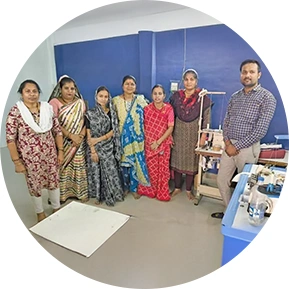
To address the issue of outdated machines, we took a loan from ICICI Bank, enabling us to purchase modern, branded sewing machines. This significantly improved our productivity and quality. With better equipment, we doubled our income which transformed our lives. In the future, we plan to shift to a commercial space in a prime location to handle larger orders and expand our services to include alterations. We have secured another loan from ICICI Bank to further scale our venture and continue our growth.

~ Omkareshwar Self-Help Group, Dewas, Madhya Pradesh

From improving livelihoods to transforming lives

ICICI Bank provided a loan to start a micro-enterprise for packing and distributing tea. The loan helped us to procure tea directly from Tea Garden and pack it locally, in small quantities for retail marketing. Our lives have improved significantly since we associated with the Bank. Each one of us is now financially independent and our families have all the amenities needed to live comfortably.

~ Sankeerthanam Kudumbashree SHG, Kerala

From renting to manufacturing fishing nets

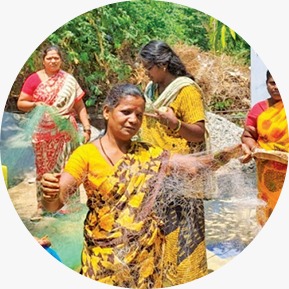
ICICI Bank approved our Self-Help Group (SHG) Loan and also counselled us on SHG business operations through Vidiyal Social Service Trust. The Loan helped us start our own fishing net manufacturing and selling business. Today, we are one of the most reputable fishing net suppliers in Kolumam village.

~ Meenvalai Thozhil SHG, Tamil Nadu

From challenges to success

I am quite confident of providing a bright future to my children. The road to comfort and happiness was filled with obstacles but ICICI Academy training gave me the strength to overcome them all.

Mrs. Deepali Giri

From a migrant labourer to a skilled technician

I came across a video on ICICI Academy for Skills, which brought a bright ray of hope in my life. I decided to join the ‘Multi Skilled Technician’ course. I found the 54 days of training extremely useful to learn the nuances of a technician’s job.

Mr. Ram Singh

Towards adopting sustainable practices of agriculture

The implementation of the Direct Seeded Rice method, has helped us reduce crop input cost and water consumption by a third. We are pleased that our yield has increased by almost 3 quintals per acre as compared to earlier methods of cultivation.

Mr. Satguru Singh