
Loan
|
Car Loan
Types of Car Loans in India
2 mins Read | 2 Months Ago
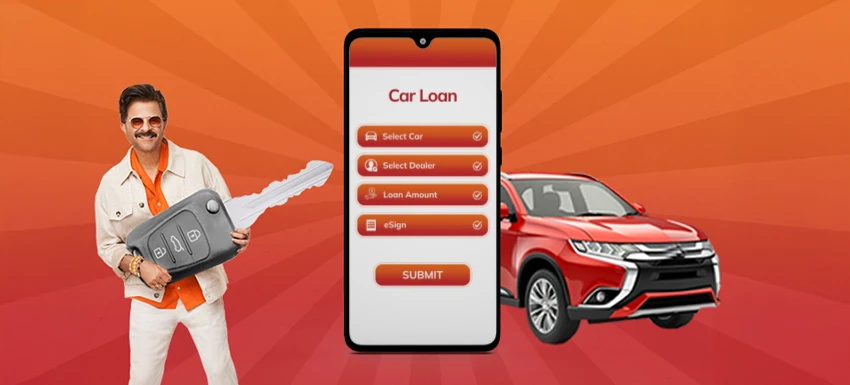
Buying a car is a major financial decision for anyone. Whether you are purchasing your first vehicle or upgrading to a premium model, choosing the right financing option is equally important. Understanding the types of Car Loans available in India helps you make an informed decision that aligns with your income, repayment capacity and financial goals.
Car Loans today are designed to be flexible, convenient and digitally accessible. From financing new vehicles to refinancing existing ones, there are multiple options to suit different needs. Let us explore the various Types of Car Loans in India in detail.
A new Car Loan helps you finance the purchase of a brand-new vehicle directly from an authorised dealer or showroom. It is one of the most commonly used financing options for individuals planning to buy a new car.
Key Features:
Financing available up to 100% of the on-road price, subject to eligibility
Flexible repayment tenure, often extending up to 84 months
Interest rates based on credit profile, income and repayment capacity
Convenient digital application process with simplified documentation
This type of loan is suitable if you are purchasing a new vehicle and prefer structured repayment through fixed EMIs over a defined tenure.
A Used Car Loan is designed for individuals who want to finance the purchase of a pre-owned vehicle.
How It Works:
Loan eligibility is determined based on the vehicle's market value and borrower profile
Interest rates may differ from new car financing
Banks evaluate income, credit history and repayment capacity before approval
The age and condition of the vehicle play an important role in loan eligibility
Among the various types of Car Loans, this option is suitable for buyers who want to reduce the purchase price while still using financing to spread payments over time.
A Top-Up Car Loan allows existing Car Loan customers to borrow additional funds beyond their current loan, provided they have a satisfactory repayment record.
Suitable For:
Vehicle repairs or maintenance expenses
Upgrading accessories or modifications
Managing short-term personal financial requirements
This option offers convenience because the borrower can access additional funds without applying for a completely new loan.
A Car Loan Balance Transfer allows borrowers to transfer their existing Car Loan from one bank to another.
Potential Benefits:
Access to more competitive interest rates
Option to revise the repayment tenure
Better EMI structuring based on current financial capacity
Opportunity to combine the transfer with a top-up facility in some cases
Among the different types of Car Loans, this option can be considered by borrowers looking to optimise their loan terms or reduce their repayment burden.
A Loan Against Car enables borrowers to pledge their existing vehicle as collateral to obtain funds while continuing to use the vehicle during the loan tenure.
Features:
Secured borrowing backed by the value of the vehicle
Loan amount determined based on the current market valuation of the car
Funds can generally be used for multiple financial purposes, depending on the borrower's financial needs
Although this option is not used to purchase a new vehicle, it is often included among the broader types of Car Loans because the vehicle serves as the underlying collateral for the loan. In many cases, banks evaluate the vehicle's age, condition and ownership details before approving the loan.
Understanding the types of Car Loans is only the first step. Choosing the right loan depends on several financial and eligibility-related factors that influence approval and repayment comfort.
Loan Amount Requirement: The loan amount is usually linked to the car’s on-road price, including the ex-showroom price, registration, insurance and taxes. ICICI Bank finances up to 100% of the on-road price, subject to eligibility. The final amount depends on your income, credit profile and repayment capacity.
Credit Score: A credit score above 700 is generally considered favourable. It affects loan approval and the interest rate offered. A strong credit history may improve approval chances and help secure better loan terms.[Text Wrapping Break]
Repayment Capacity: Evaluate your monthly income, existing EMIs and fixed obligations-to-income ratio. Choosing a loan that fits your financial capacity helps keep EMIs manageable throughout the tenure.[Text Wrapping Break]
Tenure: Car Loan tenure can extend up to 84 months. A longer tenure lowers EMIs but increases the total interest paid over time.
While eligibility may vary by loan type, most banks follow a few common criteria when assessing loan applications. These requirements help banks evaluate the borrower's repayment capacity and overall creditworthiness before approving the loan.
For Salaried Individuals
Age between 20 and 65 years
Stable employment with regular monthly income
Minimum work experience or employment continuity, depending on bank’s policies
For Self-Employed Individuals
Age generally between 21 and 70 years
Stable business income supported by financial records
Relevant financial documents, such as income statements or tax filings
Final approval is subject to the bank’s internal credit assessment, which may include evaluation of credit score, repayment history and overall financial profile.
Selecting the appropriate Car Loan type offers several advantages:
Better EMI planning
Improved financial flexibility
Structured repayment discipline
Faster approval and disbursement
Reduced financial stress
Each category within the types of Car Loans addresses different financial needs.
Applying for a Car Loan online is a simple process and can usually be completed through ICICI Bank Net Banking.
Application Steps:
Log in to your Net Banking account and navigate to the Car Loan section.
Enter the loan amount you require, and provide the necessary consent to proceed with the application.
Choose the car model and authorised dealer from whom you plan to purchase the vehicle.
Adjust the loan structure by selecting the repayment tenure and reviewing the estimated EMI.
Provide any additional personal and financial details required to process the application.
Complete the video KYC (vKYC) verification, if applicable.
Review and submit the application for further processing.
After verification and approval, the loan amount is processed in accordance with ICICI Bank’s internal policies and disbursed in accordance with the applicable guidelines.
Understanding the different types of Car Loans in India helps you to choose the financing option that suits your needs. Whether you are buying a new car, purchasing a used vehicle, refinancing an existing loan or opting for a digital loan solution, structured options are available to support your purchase.
Before finalising your loan, assess your repayment capacity, review tenure options and ensure your credit profile supports approval. A well-chosen Car Loan can help you drive home your dream vehicle while maintaining financial stability.
For disclaimer, Click Here.