
Investments
|
Mutual Funds
How to Compare Mutual Funds? Tips & Strategies
2 mins Read | 2 Weeks Ago
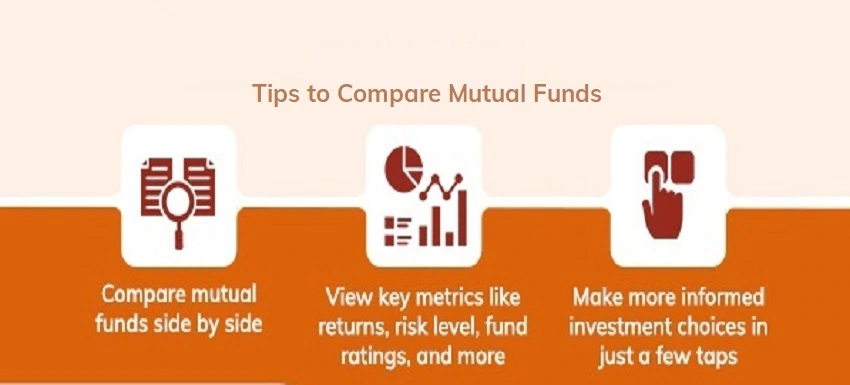
Comparing Mutual Funds is essential for making informed investment decisions. With numerous options available, evaluating factors like past performance, expense ratios, risk levels and investment objectives can help you choose the right Fund. In this blog post, let’s explore key strategies and practical tips to compare Mutual Funds effectively, ensuring your investments align with your financial goals.
If you are considering investing in Mutual Funds, it is important to compare Funds before choosing the right one for you. Each Mutual Fund offers different risk levels, returns and asset allocation. Below are the major reasons why comparing Mutual Funds is recommended:
Follow the steps below to compare different Mutual Funds.
Begin your investment journey by analysing the Fund’s past performance. To do this, start by comparing the past returns over different periods. This way you will get insights about the Fund’s consistency and stability.
Make sure that you consider the expense ratio and related charges like exit load and management fees. The expense ratio indicates the cost of managing the Fund. A higher expense ratio means a higher percentage of your money goes towards fund management rather than towards the actual investment.
When investing in Mutual Funds, it is important to check your risk tolerance. It indicates how well you can manage the risks related to the Fund you have selected. Evaluate key indicators such as the Sharpe ratio for risk-adjusted returns, standard deviation for volatility and beta for market sensitivity to make informed Mutual Fund comparisons.
Check various Mutual Fund categories such as Equity, Debt and Hybrid Funds. For this, you can compare Funds within the same category to make a decision. For example, comparing an Equity Large-Cap Fund with a Debt Fund would not be ideal due to their different risk levels and objectives.
Make sure to review the Fund Manager’s track record and investment decisions in different market conditions. A consistent performance across market cycles indicates strong expertise and effective fund management.
Choose Funds based on your financial goals. Ask yourself the purpose of your investment e.g. retirement, education or wealth building and choose the appropriate Fund
Making calculative decisions is important. However, mistakes can always creep in. Here’s a list of common errors to be avoided while doing your research.
Avoid the mistake of ignoring risk assessment. Take the time to evaluate all associated risks along with volatility, market fluctuations and drawbacks.
Considering only the Fund’s past performance can negatively affect your choice. Instead of selecting a Fund solely based on high historical returns, you should evaluate consistency and market adaptability.
High fees and expense ratios can affect overall returns and hence should not be overlooked. Always compare Funds based on return on investment to maximise profits.
Investing in multiple Mutual Funds with similar asset allocations does not provide true diversification. Choose Funds from different categories to balance risk while taking care to stay aligned to your financial objectives.
You should align Mutual Fund choices with your investment horizon. Low-risk Funds are suitable for short-term goals or goals where capital protection is paramount, whereas Equity Funds are suitable for long-term goals.
Selecting a Mutual Fund without conducting thorough research can lead to poor investment decisions. Do consult financial advisors or get a second opinion from investor friends before making a final choice.
A Fund Manager’s expertise and decision-making skills significantly impact the Fund’s performance and consequently, your portfolio. Ignoring this aspect may lead to you selecting underperforming Mutual Funds.
Conclusion
It is recommended to compare Mutual Funds before starting your investment journey. To make better investment choices, take into consideration all the above-mentioned factors and then choose the Mutual Fund that aligns with your financial goals. A well-researched decision can help you maximise returns while managing risks effectively. Regularly reviewing your investments ensures they stay aligned with your evolving financial needs.