Postcards once carried little pieces of happiness, sunlit beaches, snowy peaks or bustling streets. They were simple, heartfelt reminders from people who had travelled far and wanted to share a slice of that joy. Online travel scams often look like a postcard - dream destinations on the front, but the story on the back tells a very different tale. Here are a few ‘postcards’ you’d never want to receive.

NOVEMBER 2025 | VOL. 54
Share




Vacation or Trap?
How to Avoid Travel Scams and Protect Your Money
3-minute read
Beach Bliss or Empty Plot?


Lesson:
Always double-check URLs and verify agencies before booking.
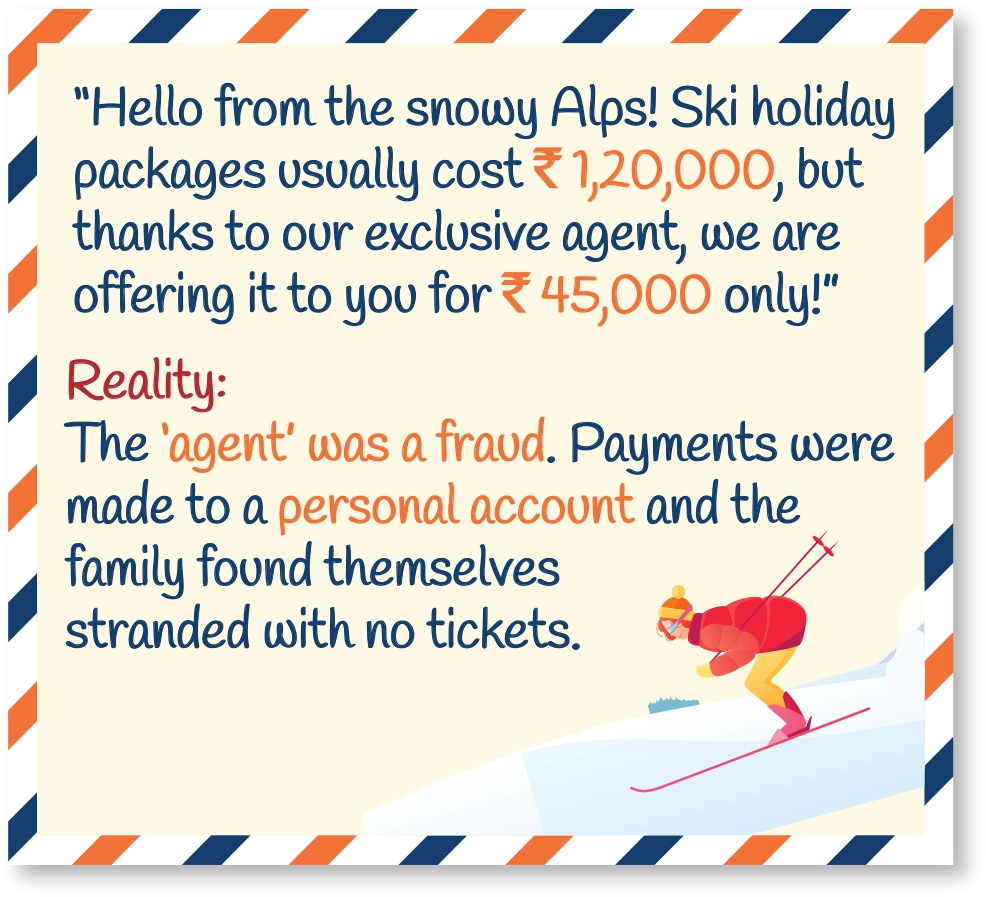
Alpine Adventure or Missing Agent?
Lesson:
Never transfer money to personal accounts. Use secure payment channels such as credit cards or trusted payment gateways.
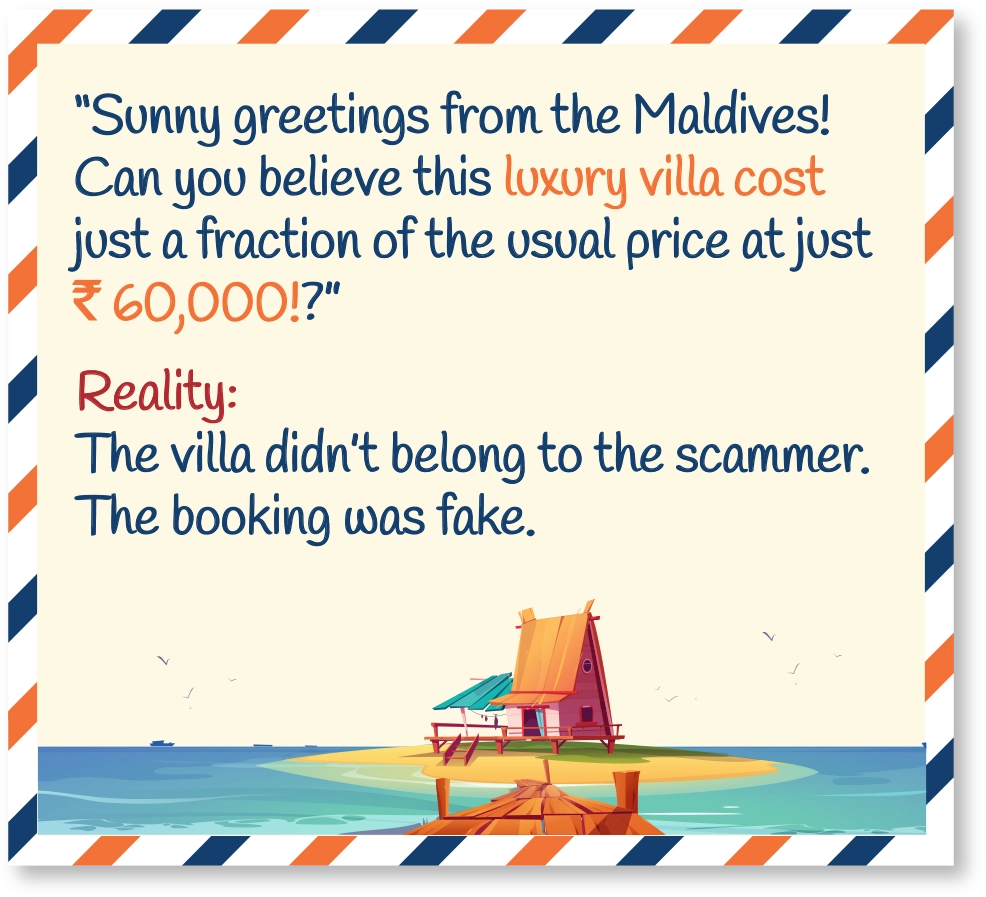
Island Paradise or False Promise?
Lesson:
If a deal feels too good to be true, it probably is.

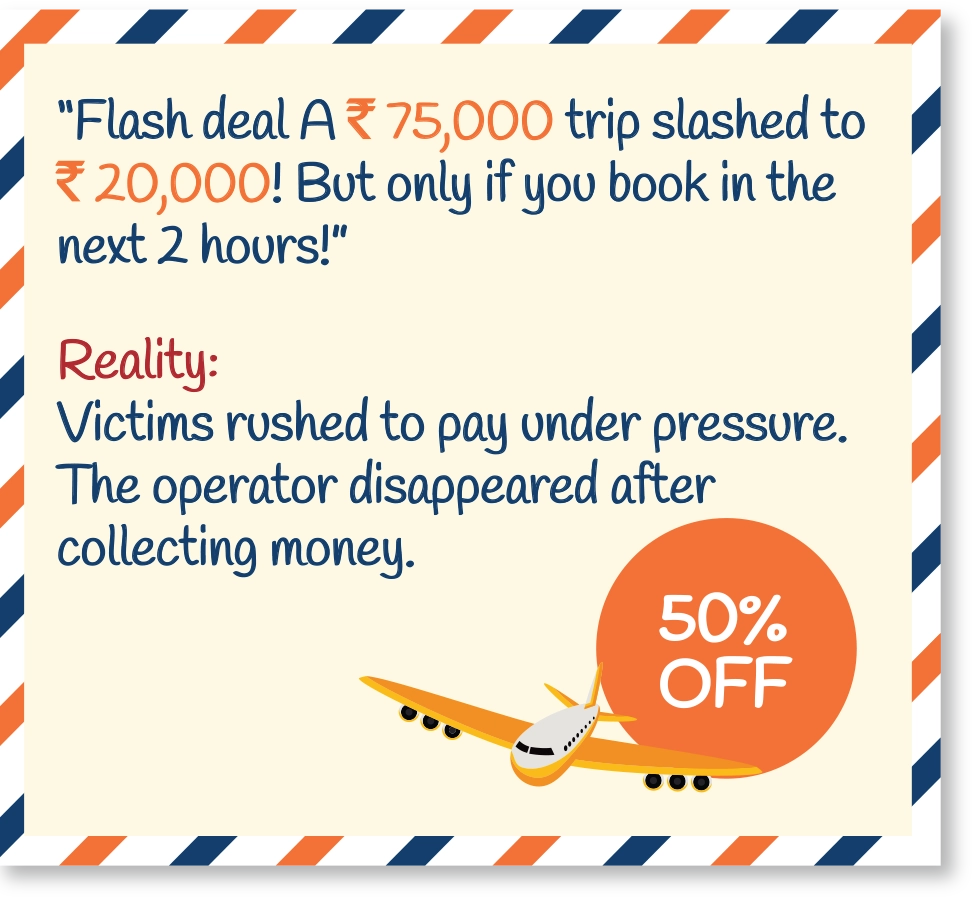
Deals that Fizzle Out!

Lesson:
Real offers don’t vanish in hours. Always take time to verify before paying.
Don’t let scammers turn your dream vacation into a nightmare postcard. Research, verify and book smart, so that every postcard you send, carries only happy memories.
Safety Tips to Protect Yourself

Research and Verify:
Always verify a travel agency's legitimacy by checking official websites, customer reviews and verified contact information.

Be Skeptical of Deals:
If a package seems too good to be true, stay alert.
Secure Payments:
Use credit cards or secure payment gateways that offer buyer protection. Avoid direct transfers to personal accounts, cash payments, cryptocurrencies or gift cards.
Get Everything in Writing:

Ensure you receive official confirmation, itineraries and payment receipts with all terms and conditions clearly stated.

Avoid Suspicious Links:
Do not click on links or open attachments in unexpected emails or messages.
Check URLs:

Always confirm that you are on the legitimate provider's official website before entering any personal or financial information.

Guard Personal Information:
Never share sensitive personal or financial details over the phone or unverified platforms.
Consult Others:

Discuss travel offers with trusted friends, family or colleagues for a second opinion.
If you are a victim of online fraud, reach out to the National Cyber Crime at cybercrime.gov.in, call the helpline number on 1930 or call ICICI Bank’s helpline number on 1800 2662.
If you receive malicious, phishing or suspicious emails or calls, report them to Sanchar Saathi and ICICI Bank at antiphishing@icicibank.com.


