What people often miss

Shadow vs Light in Personal Finance: Know the Hidden Costs

2-minute read

Stand outside on a sunny day. You see light. You also see your shadow.

The light is clear, visible and obvious. The shadow? Subtle, often ignored but always present.

Personal finance works exactly the same way. Most of us stay in the light, saving money, investing in Fixed Deposits (FDs), Mutual Funds or stocks and paying Credit Card bills on time. These are good, even necessary habits. But they are also the visible basics that everyone knows about.

However, the real difference arises when you account for what lies in the shadows too, the things people often miss but which shape long-term financial health.

The Shadow: Hidden Financial Costs Every Investor Must Know

The quieter parts of money management do not get much attention, but ignoring them can throw your finances off balance.
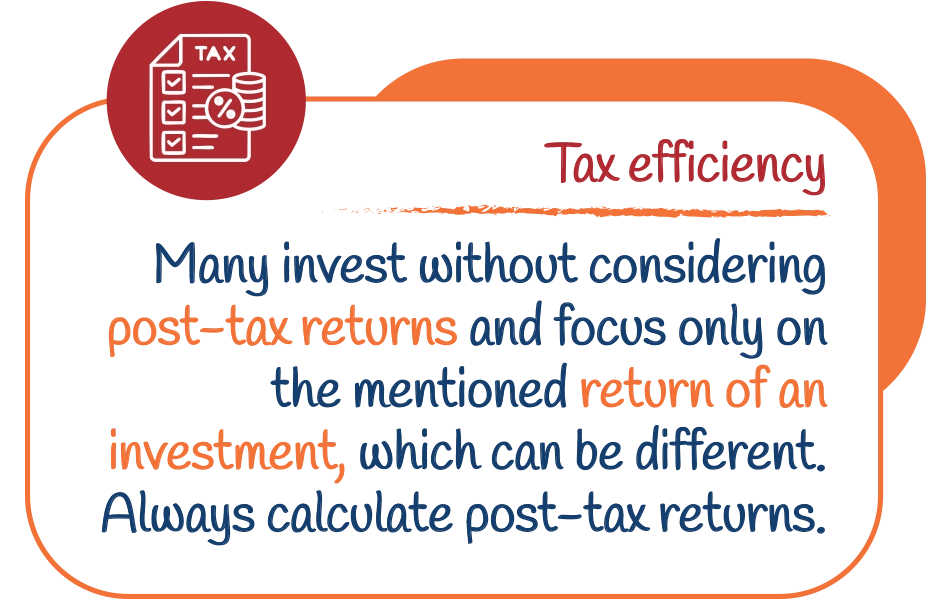
Inflation planning: Inflation planning While investing and saving for future goals, many forget to include the impact of inflation. This leaves a corpus that feels adequate but falls short in real terms. Inflation eats away silently, like a shadow lengthening over time. Tax efficiency:Tax efficiency Many invest without considering post-tax returns and focus only on the mentioned return of an investment, which can be different. Always calculate post-tax returns. Emergency readiness: While savings are common, not many ring-fence a proper 6-month emergency fund. It is rarely required until a crisis hits. Time horizon mismatch: People put long-term money into instruments they may need soon or keep surplus cash idle instead of investing for decades. Shadows form when timelines do not align. Behavioural biases: Herd investing, panic selling, chasing trends. Most investors do not realise their emotions cast the longest shadow on financial decisions. Time Value of Money: A rupee today is worth more than a rupee tomorrow, yet many delay investments or leave money idle in low-yield accounts. Ignoring investment reduces the compounding power that builds wealth over time. Currency fluctuations: For international investments or overseas goals, exchange rates can significantly alter outcomes. A weakening rupee inflates foreign costs, while a stronger one reduces overseas costs. Capital Gains Tax: Investors often celebrate potential returns without factoring in the tax hit at withdrawal. Equity, Debt and Mutual Fund redemptions are taxed differently, shrinking the final amount in hand. Keep in mind the capital gains added to income may also push the total income to a level where surcharge may apply. Insurance gaps: Many underestimate how much cover they need. Use a life insurance calculator to factor in your age, income, lifestyle and goals. Asset allocation: Too much equity? Too much debt? Or just cash lying idle? Proper allocation, based on your risk profile, helps build a diversified portfolio. Longevity risk: With people living longer, outliving your money is a real concern. Retirement planning is about both wealth creation and preservation.

These are blind spots that exist because people focus only on what is easy to see.

The Illusion of Growth in Investments

How Inflation and Taxes Affect Real Investment Returns
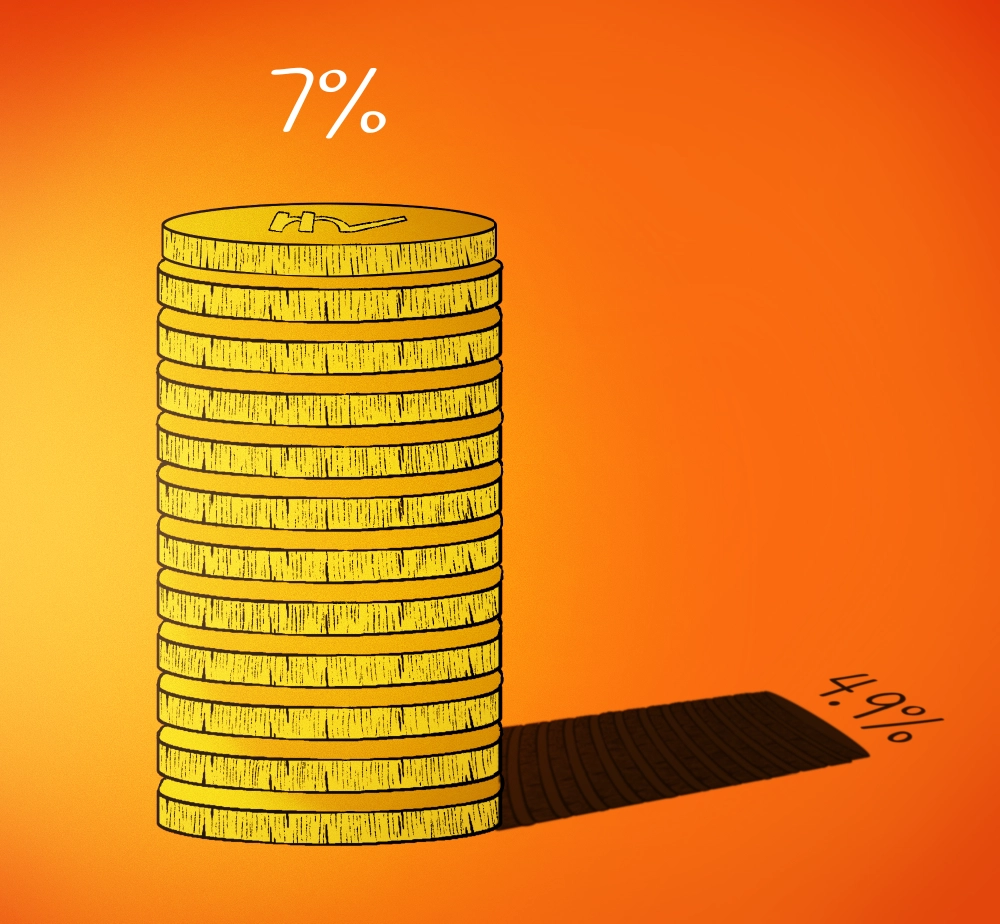
7% 49%

Let us understand this through Rohan’s example.

At 36, Rohan felt his money was in safe hands. Back in 2015, he invested ₹1 lakh in a 10-year bond offering 7%. ‘Guaranteed income, no stock market risk,’ he thought.

Fast forward to 2025. On paper, his investment had grown to around ₹1.63 lakh. A tidy 63% gain without any effort. The numbers looked reassuring.

But here’s the twist.

In a 30% tax bracket, his post-tax returns weren’t really 7%, but closer to 4.9%. Add inflation into the mix with India’s average inflation rate over the past decade at ~5%*.

Now, compare the two:

  • His money grew at ~4.9% after tax.

  • The cost of living rose at ~5%*

Result? The ₹1.63 lakh in 2025 could buy less than what ₹1 lakh did back in 2015. His nominal returns looked great but in real terms, his purchasing power shrank.

That’s the danger of ignoring the shadows. The light shows you growth. The shadow shows whether that growth is real or just an illusion.

True financial health comes from balancing both the light, which is visible and the shadows, which are usually overlooked.

*Retail Inflation Rate. Source: Press Information Bureau 2024-25
Tax Benefits are subject to amendments in tax laws from time to time.